
This article contains affiliate links. As an Amazon Associate, I earn from qualifying purchases at no extra cost to you.
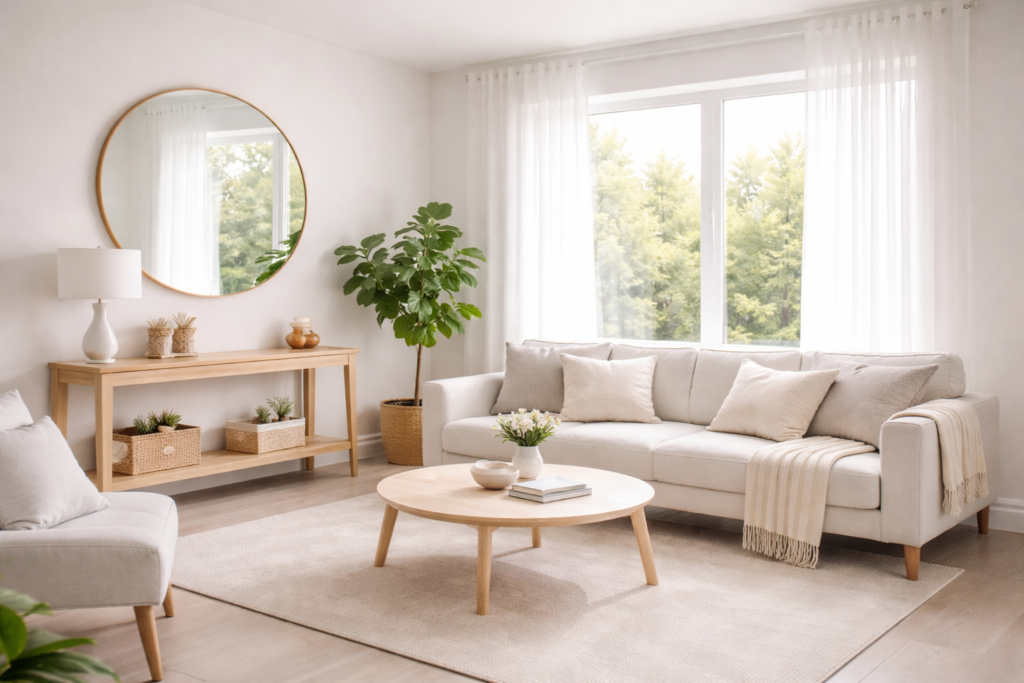
Small spaces don’t feel cramped because of their size. They feel cramped because of how they are designed.
The right visual changes can completely shift how a room feels without adding a single square foot. When you control light, layout, and perception, even tight spaces can feel open and comfortable.
1. Use Light Colors to Open Up the Space
Light colors reflect more light, which makes a room feel brighter and more open.
Walls, ceilings, and larger furniture pieces should stay in a similar light color range to avoid breaking up the space visually.
Dark colors can still be used, but only as accents rather than the main focus.
2. Add Mirrors to Reflect Light and Depth
Mirrors are one of the most effective ways to make a room feel larger.
They reflect both natural and artificial light, which instantly increases brightness and depth.
• Place mirrors across from windows
• Use large mirrors instead of multiple small ones
• Keep placement simple and intentional
This creates the illusion of more space without changing the layout.
3. Keep Furniture Proportional to the Room
Oversized furniture is one of the fastest ways to make a space feel smaller.
Instead of filling the room, choose pieces that match the scale of the space.
• Lower-profile sofas and chairs
• Slim tables instead of bulky ones
• Furniture that does not block movement
This helps maintain an open and balanced layout.
4. Let Natural Light Flow Without Obstruction
Natural light makes any space feel larger.
Avoid blocking windows with heavy curtains or large furniture. Keep window treatments light and minimal so light can move freely through the room.
The more light that enters the space, the more open it will feel.
5. Use Vertical Lines to Create Height
Vertical elements draw the eye upward, which makes ceilings feel higher.
• Tall shelves
• Floor-to-ceiling curtains
• Vertical wall details
These create a sense of height even in smaller rooms.
For practical ways to use vertical space efficiently, small space storage ideas that work in any room shows how to combine function with design.
6. Keep the Floor as Open as Possible
Visible floor space makes a room feel larger.
Furniture that sits directly on the floor can make the space feel heavy, while raised furniture creates openness underneath.
• Use furniture with legs
• Avoid blocking large sections of the floor
• Keep pathways clear
This allows the room to breathe visually.
7. Use a Consistent Color Palette
Too many contrasting colors can make a space feel busy and smaller.
Keeping a consistent palette creates a smoother visual flow.
• Stick to 2–3 main colors
• Use similar tones across the room
• Avoid sharp contrasts in large areas
This helps the space feel more connected and less crowded.
8. Use Lighting to Expand the Space
Lighting changes how a room feels more than most people expect.
Instead of relying on one central light, layer your lighting.
• Use multiple light sources
• Add soft lighting in darker corners
• Avoid harsh shadows
A well-lit room always feels more open.
9. Reduce Visual Clutter Without Over-Decorating
Even well-designed spaces can feel small if there is too much happening visually.
Keep décor intentional and limited.
• Choose a few key pieces instead of many small ones
• Avoid overcrowding shelves or surfaces
• Keep layouts simple
If clutter is a recurring issue, how to declutter your home quickly and effectively helps create a cleaner foundation.
10. Use Layout to Improve Flow
How furniture is arranged matters as much as what you use.
A poor layout can make a room feel smaller than it is.
• Keep walkways open
• Avoid blocking natural paths
• Arrange furniture to create movement
If you want to improve efficiency along with design, smart storage hacks for small spaces maximize every inch fast shows how to combine both.