This article contains affiliate links. As an Amazon Associate, I earn from qualifying purchases at no extra cost to you.
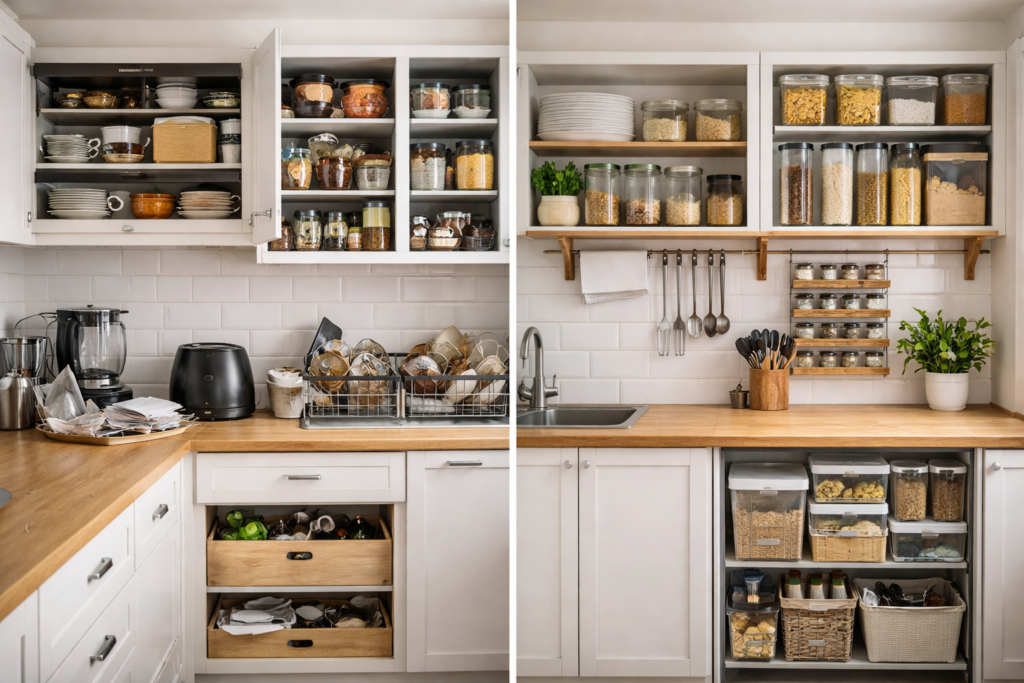
A small kitchen can feel cramped even when it’s clean. The issue often isn’t the space itself, but how that space is being used.
Many kitchens feel smaller than they actually are because of simple storage mistakes that go unnoticed. Once you fix them, your kitchen starts to feel more open, functional, and easier to manage.
Relying On Counter Space Instead Of Storage
One of the most common mistakes is using counters as storage.
It may seem convenient at first, but it quickly makes the kitchen feel crowded.
• Leaving Appliances Out That Aren’t Used Daily
• Storing Random Items Without A System
• Letting Small Items Accumulate Over Time
Instead, keep counters focused on function. Only leave out what you use every day and store everything else properly.
Overfilling Cabinets Without Structure
Many people assume full cabinets mean efficient storage.
In reality, overfilled cabinets make everything harder to access and easier to forget.
• Items Get Lost In The Back
• Stacks Become Unstable
• You End Up Buying Duplicates
Using a pull out cabinet organizer system helps create structure and keeps everything accessible.
For a more complete approach, combine this with kitchen organization ideas for small spaces.
Ignoring Vertical Space Completely
Vertical space is one of the biggest missed opportunities in small kitchens.
Without using it, you limit how much storage your kitchen can actually handle.
• Empty Walls That Could Be Used For Shelves
• Unused Cabinet Sides
• No Hanging Storage For Tools
A wall mounted kitchen shelf organizer can instantly create more usable space without adding clutter.
If you want to go further, explore small kitchen storage ideas that actually work.
Using Too Many Different Storage Systems
Mixing too many types of containers and organizers creates inconsistency.
This makes your kitchen feel more chaotic and harder to maintain.
• Different Container Sizes That Don’t Stack
• Random Bins Without Clear Purpose
• Lack Of Visual Consistency
Using a stackable food storage containers set helps keep everything aligned and easier to manage.
Not Organizing Based On Daily Use
A kitchen should be organized around how you actually use it.
When it isn’t, even simple tasks feel inefficient.
• Frequently Used Items Stored Too Far Away
• Cooking Tools Not Near The Cooking Area
• Cleaning Supplies Hard To Reach
Organizing based on daily habits makes everything faster and more intuitive.
You can also combine this with kitchen storage hacks that instantly free up space to improve efficiency.
Creating Temporary “Drop Zones” That Become Permanent
One small habit that causes big problems is creating temporary spaces for items.
These quickly turn into clutter zones.
• Random Corners Used For Storage
• Items Left Out “For Later”
• Surfaces That Slowly Fill Up
The fix is simple. Everything needs a permanent place.
If something doesn’t have a home, it becomes clutter.
Keeping Items You Don’t Actually Use
Small kitchens don’t have room for unnecessary items.
Keeping things “just in case” usually leads to overcrowding.
• Duplicate Tools That Serve The Same Purpose
• Rarely Used Appliances Taking Up Space
• Items Stored Out Of Habit Instead Of Need
If your kitchen feels tight, removing unused items often makes the biggest difference.
Start with a reset using how to declutter your home quickly and effectively.
Letting Clutter Build Up Over Time
Even a well-organized kitchen can become messy without maintenance.
The key is consistency, not perfection.
• Skipping Small Daily Resets
• Letting Dishes Or Items Sit Too Long
• Ignoring Small Messes Until They Grow
Simple habits keep your kitchen under control without effort.
For long-term consistency, combine this with how to maintain a tidy home without stress.
A small kitchen doesn’t feel small because of its size. It feels small because of how the space is used. Once you remove these mistakes, your kitchen becomes easier to manage, more functional, and far more enjoyable to use every day.