
This article contains affiliate links. As an Amazon Associate, I earn from qualifying purchases at no extra cost to you.
Why Decluttering Feels Overwhelming
A cluttered home creates more than just a visual problem. It adds stress, reduces focus, and makes everyday tasks feel harder than they should. The biggest challenge is not the clutter itself, it is figuring out where to begin.
Many people delay decluttering because they think it requires a full day or even an entire weekend. In reality, the most effective approach is simple, structured, and repeatable. Once you shift your mindset from perfection to progress, decluttering becomes much easier to manage.
Start Small to Build Momentum
The fastest way to fail is trying to declutter your entire home at once. It feels overwhelming and leads to burnout.
Instead, focus on a small, defined space:
- A single drawer
- One shelf
- A small section of a room
Finishing one small area gives you a sense of progress and builds momentum. If you want to keep that momentum going, combining this approach with how to maintain a tidy home without stress helps turn small wins into long-term habits.
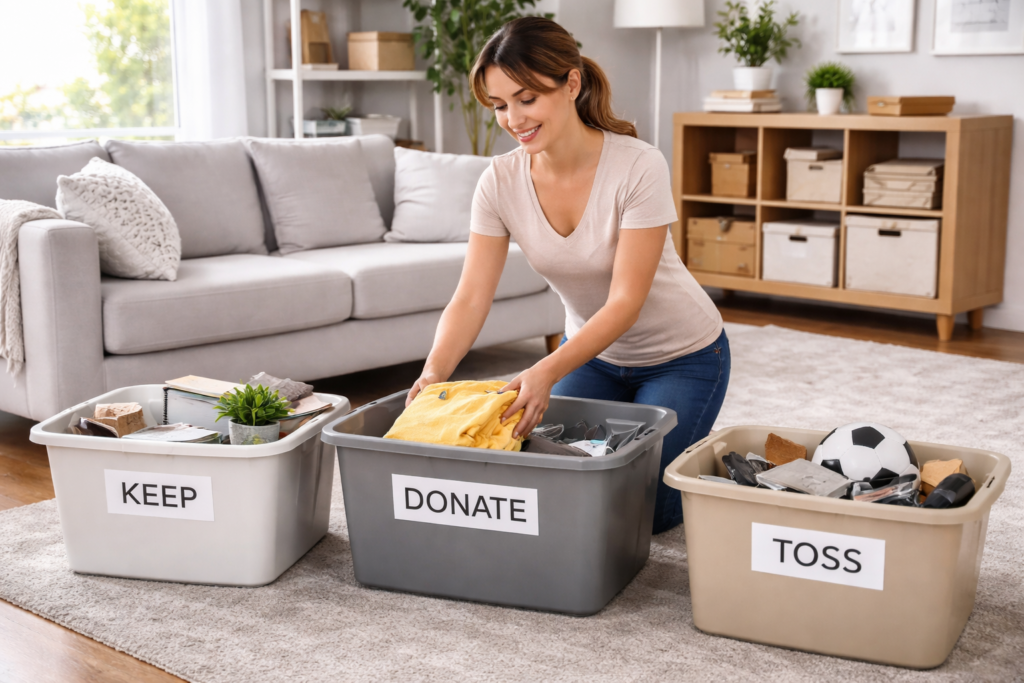
Use the Keep, Donate, Toss Method
One of the most effective decluttering systems is also the simplest.
Sort every item into three categories:
- Keep
- Donate
- Toss
This removes hesitation and speeds up decision making. Instead of overthinking each item, you are following a clear system.
Using storage bins for home organization helps keep each category separated and prevents items from mixing back together while you work.
Work in Short, Focused Sessions
Decluttering does not need to be a long, exhausting process.
Set a timer for 20 to 30 minutes and focus only on one area. This keeps your energy high and prevents the task from feeling overwhelming.
Short sessions are easier to repeat daily, which is far more effective than occasional deep decluttering.
Declutter by Category for Better Results
Most people declutter room by room, but this often leads to missed duplicates.
Instead, try decluttering by category:
- Clothes
- Kitchen items
- Books
- Miscellaneous items
This gives you a clear picture of how much you own and makes it easier to remove unnecessary items.
If you are working with limited space, pairing this with 10 creative ways to make small spaces feel bigger helps you maximize the space you create.
Create a Temporary Sorting System
One common mistake is letting sorted items sit around the house.
To avoid this, create a temporary system:
- A bin for donations
- A bag for trash
- A space for items that belong elsewhere
Using collapsible storage baskets for organizing makes it easier to move items around without creating new clutter.
This keeps your process clean and efficient from start to finish.
Use Storage the Right Way
Storage is helpful, but it should never be used to hide clutter.
Once you have reduced what you own, then you can organize what remains. The goal is to make items easy to access and easy to put back.
Simple solutions like bins, drawers, and shelves should support your system, not replace it.
For more ideas, 10 simple DIY storage hacks for every room in your home can help you make the most of your space.
Keep Surfaces Clear for Instant Impact
Flat surfaces collect clutter quickly and make your home feel messier than it actually is.
Clearing off counters, tables, and desks creates an immediate visual improvement. It also makes cleaning faster and easier.
If clutter keeps returning to these areas, it usually means those items do not have a proper place yet.
Turn Decluttering Into a Daily Habit
Decluttering is not a one time task. It is a habit.
Spending just 10 minutes a day putting things back and removing unnecessary items prevents clutter from building up again.
Pairing this with daily cleaning habits that keep your home spotless helps maintain both cleanliness and organization without extra effort.
Why This Approach Works Long Term
The reason most decluttering efforts fail is because they rely on motivation instead of systems.
When you focus on small actions, clear categories, and consistent habits, your home becomes easier to manage over time.
Decluttering stops feeling like a chore and becomes part of your routine. That is when your space truly starts to feel organized, functional, and stress free.